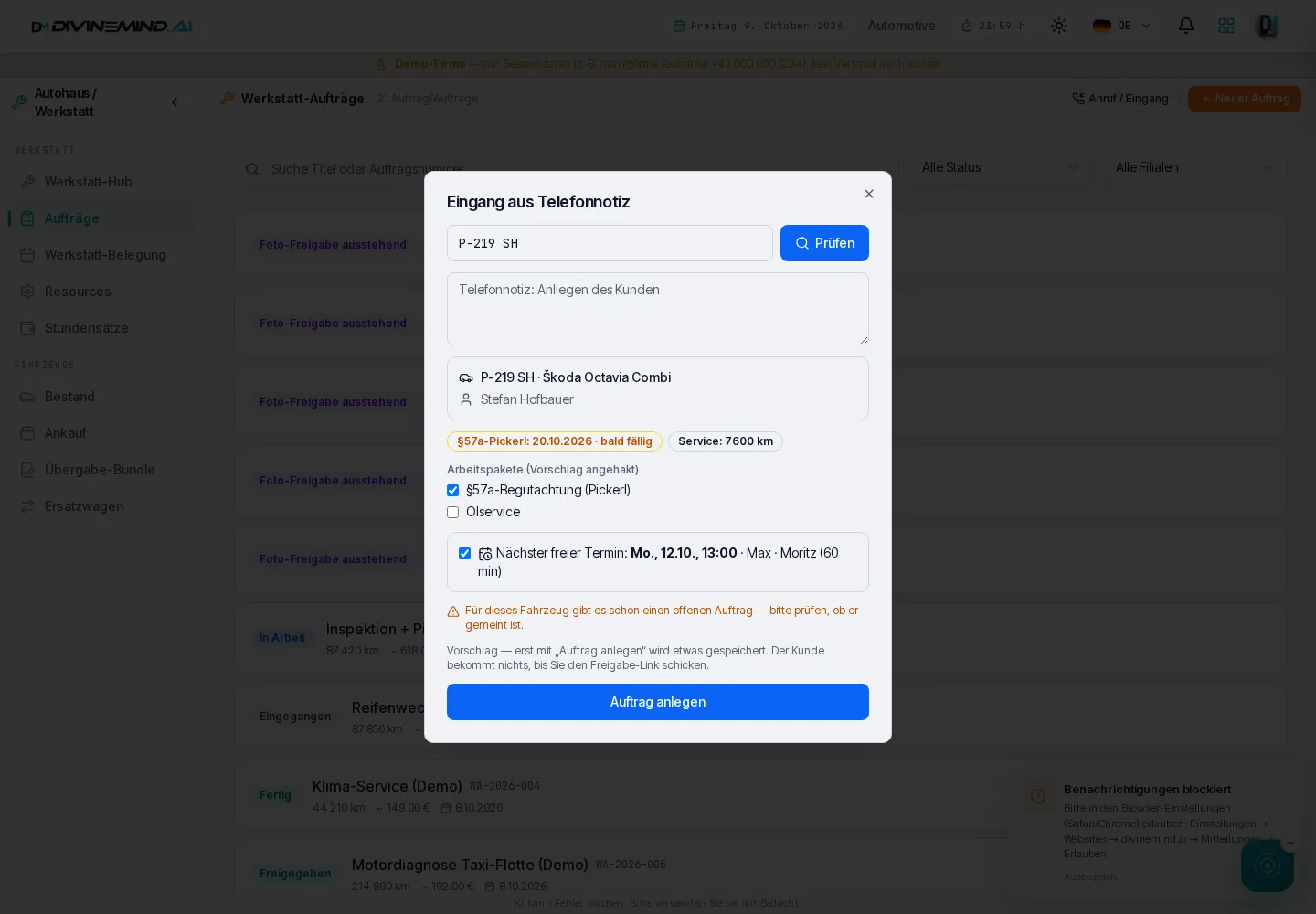
How a call with AI works
A typical call in four steps:
- The call is answered immediately, even in the evening, on weekends, or when everyone is busy.
- The AI recognizes the reason for the call: appointment, question, order, issue, callback request.
- It handles what it's authorized to do, for example, booking an available slot in the calendar.
- The team receives a summary with the caller, the request, and the next step.
Who benefits most
Businesses that experience ringing phones while their staff are with customers benefit the most: trades, medical practices, gastronomy, property management, workshops. Every missed call is a potential customer lost to a competitor.
What to look out for
Callers should know they are speaking with an AI. The EU AI Act mandates this transparency for systems interacting with people (Article 50). Also important: integration with your actual calendar, recognition of known callers, a smooth handover to a human, and data storage within the EU.
Who Does What?
AIRIS Prepares
- Take calls and book appointments: Around the clock, directly into your calendar, with the appropriate team member.
- Recognize known callers: Callers are identified via their phone number in the CRM. Requests are logged as notes in the customer file.
- Real-time notifications: The team is notified via email or within AIRIS about who called and what action is required.
- Solutions by industry: Pre-configured workflows for various industries, such as medical practices, trades, or property management.
You Decide
- Complaints, emergencies, and sensitive conversations should be handled by a human. The AI should recognize and escalate these.
- Prices and binding commitments only if clearly defined.
- Call recordings only with a legal basis and notification to the caller.