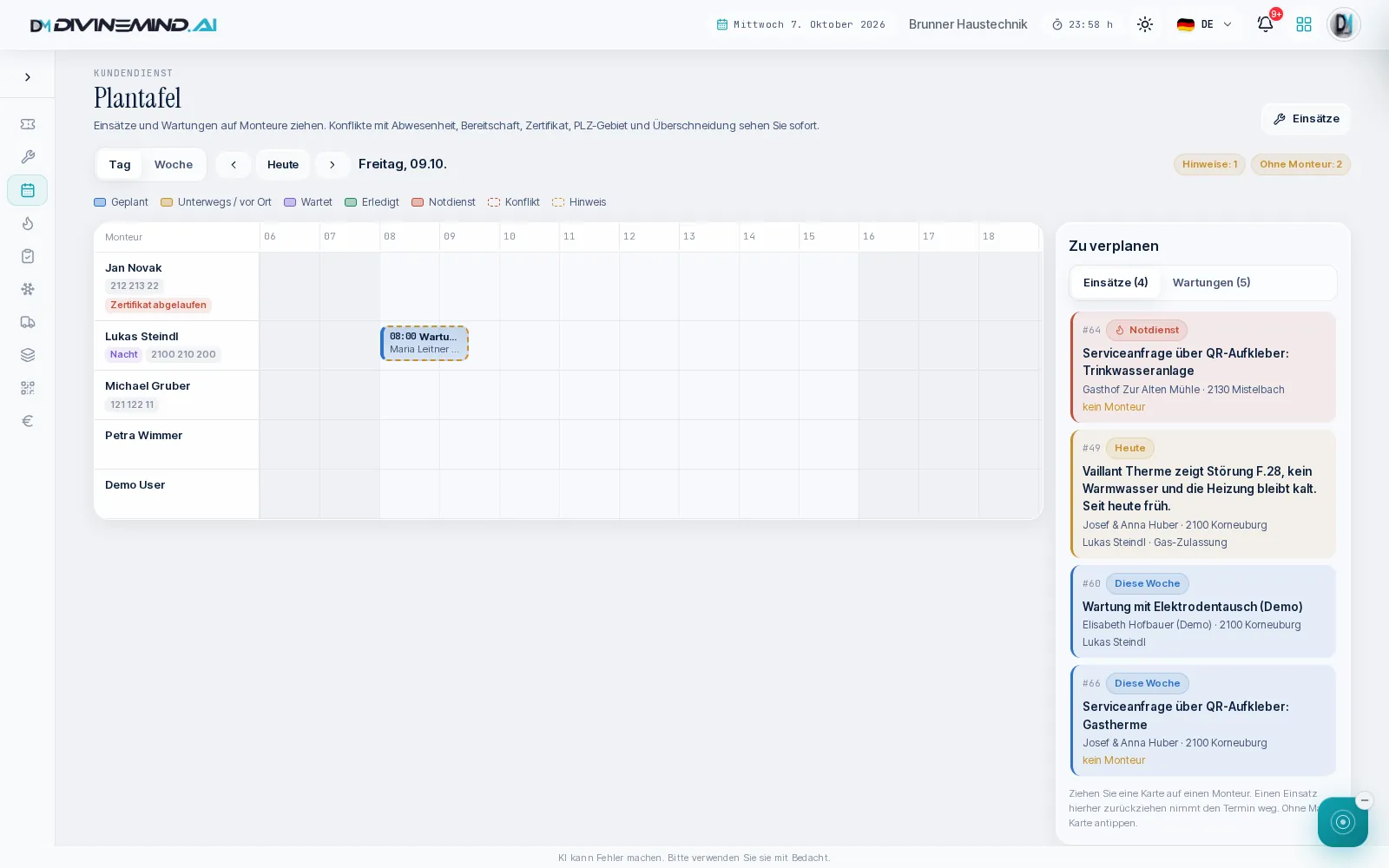
Where time is lost in small businesses
In small businesses, owners and skilled workers handle administration on the side: emails in the evening, invoices on the weekend, phone calls in between. This is precisely the type of work that is well-suited for AI because it consists of text, fixed processes, and data that already exist within the company.
- Inquiries that are answered too late or get lost.
- Calls that go unanswered because everyone is with a client or on a construction site.
- Invoices that are manually typed, filed, and forwarded to the tax advisor.
- Offers that are not followed up on.
What concretely changes with AI
An AI assistant connected to your inbox, calendar, customer records, and accounting can read an inquiry, identify the customer, prepare a suitable response, and suggest an appointment. Invoices are read upon receipt, and outstanding items are flagged. The human reviews the result and approves it.
The difference between a chatbot and an agent is important: a chatbot answers questions. An AI agent performs tasks using tools, such as scheduling an appointment or preparing a reminder. For businesses, the latter is primarily what counts.
How to start without a large project
You don't need an IT project. A sensible start in three steps:
- Choose a task that occurs daily and is measurable, for example, processing your inbox.
- Let the AI suggest actions first and review the results for two weeks.
- Only then allow individual, low-risk steps to run independently.
Who Does What?
AIRIS Prepares
- Potential Analysis: Shows in a few minutes which tasks in your business AI can take over.
- AIRIS: The AI assistant that receives and completes tasks in its own words.
- DivineCRM: Customers, inquiries, and offers in one place, with automatic email follow-up.
- Industries: Ready-made workflows for trades, gastronomy, property management, publishing, and other industries.
You Decide
- Prices, commitments to customers, and legally binding declarations should remain in human hands.
- AI only knows what is in your systems. Knowledge that exists only in people's minds must first be documented.
- Without clear rules on what the AI is allowed to do independently, trust cannot be built. Define these rules for each task.