Chatbot vs. Agent: the crucial difference
A chatbot returns text. An AI agent receives a goal, selects appropriate tools, and executes steps. "Schedule my appointment with Mr. Huber on Thursday and send him a confirmation" becomes two actions: a calendar entry and a prepared email.
What AI agents can reliably handle today
Tasks with a clear, verifiable outcome are well-suited:
- Create, reschedule appointments, and inform participants.
- Read, categorize emails, and prepare replies.
- Create contacts, tasks, and notes.
- Extract data from receipts and process them as incoming invoices.
- Follow up on and remind about open offers and invoices.
- Execute recurring processes according to fixed rules, e.g., a report every Monday.
How you maintain control
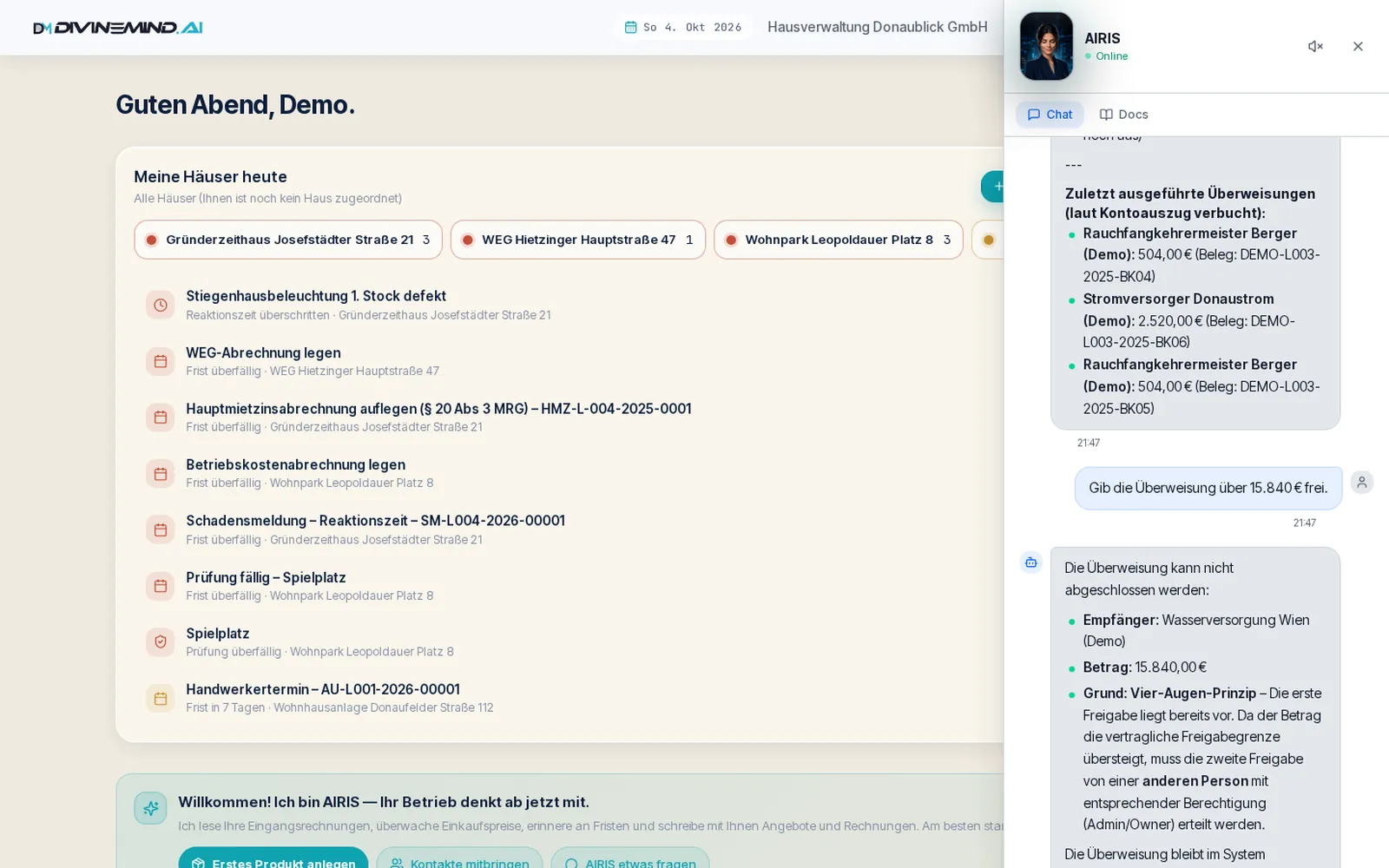
Trust is built in stages. It has proven effective to define for each task whether the AI should only suggest actions, act after your approval, or operate autonomously. Every action should be logged and traceable.
The EU AI Act explicitly requires effective human oversight for high-risk systems (Article 14). This principle is also sensible outside these systems: humans decide how much autonomy an AI is granted and can revoke it at any time.
Who Does What?
AIRIS Prepares
- Autonomy slider per task: Suggest, act after approval, or autonomous: you set it per task. Every action is logged.
- AIRIS Skills: AIRIS recognizes recurring processes in your business and suggests them as Skills. It only uses them after human confirmation.
- Workflows: Fixed processes that run on a schedule or trigger, e.g., follow-up on open offers.
- Potential analysis: Shows which tasks in your business an AI agent can take over.
You Decide
- Moving money, closing contracts, and making commitments to clients: human approval should always be required here.
- An AI may not always recognize unusual cases as unusual. Please review exceptions.
- Autonomy only after a review phase and only for specific, clearly defined tasks.